
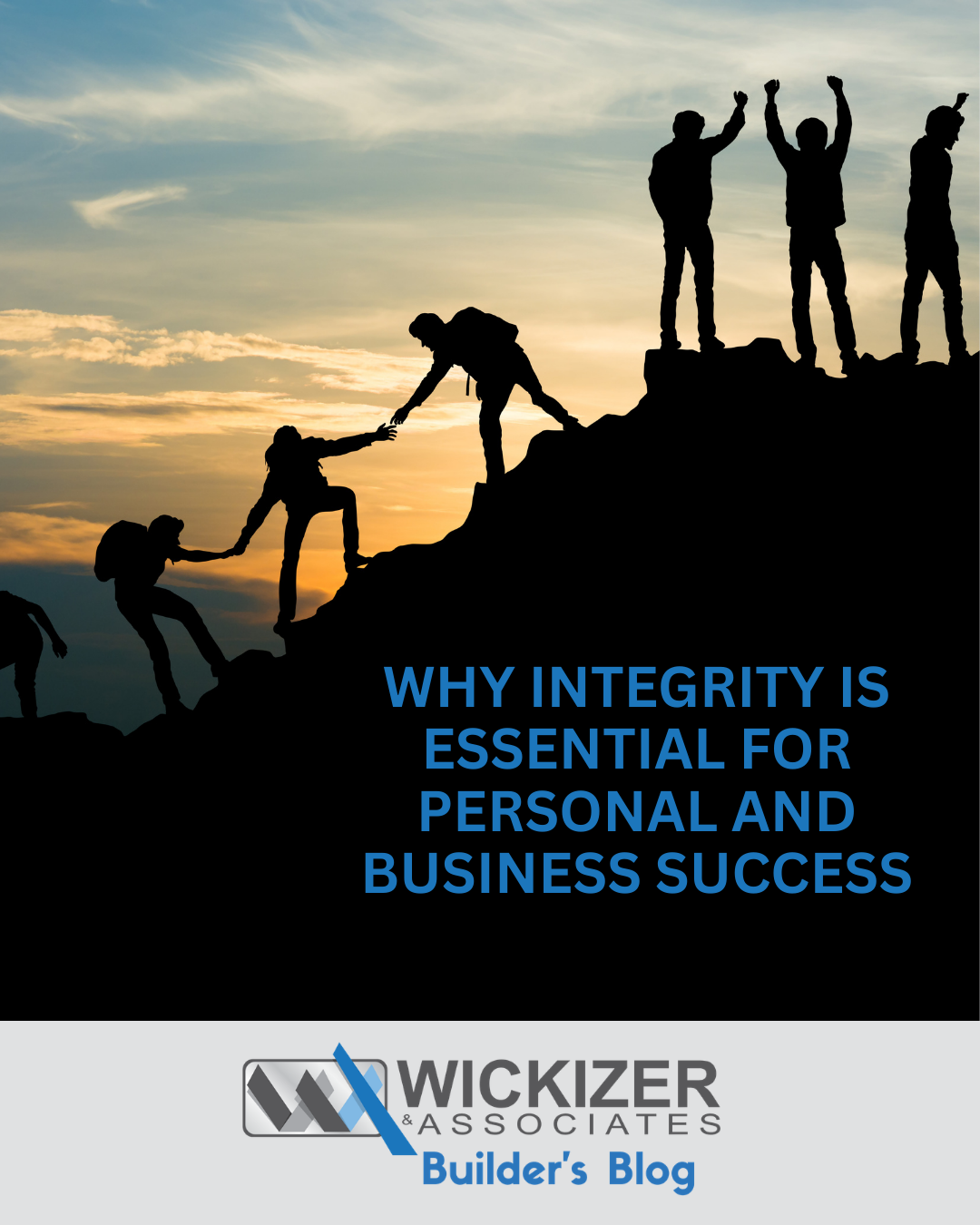
Integrity isn’t just a virtue. It’s the foundation of a successful business and a respected leader. Without it, trust erodes, teams become disengaged, and long-term growth becomes impossible. For building professionals and executives, maintaining integrity is crucial to establishing a strong reputation and a thriving business.
Integrity is about alignment and wholeness. The word comes from the Latin integritas, meaning “whole” or “undivided.” In construction, structural integrity ensures a building stands strong. In business, integrity ensures your company stays aligned with its mission, core values, and long-term vision. Just as a weak foundation leads to collapse, a business that lacks integrity will struggle to gain trust, retain employees, and sustain success.
A business built on a foundation of integrity will always have an advantage over one that lacks it. Similarly, a leader who has integrity will outperform those who do not. Here are just a few outcomes of operating with integrity:
- Earns trust and credibility with clients, employees, and partners
- Creates a strong foundation for long-term success and profitability
- Attracts and retains top talent who share the company’s values
- Strengthens customer loyalty by consistently delivering on promises
Living with integrity and running a business with integrity require intention and attention. It begins with a solid foundation of core values. Here are a few ways to start:
- Clarify Your Core Values – Define the principles that guide your decisions and leadership
- Align Actions with Values – Ensure your daily operations reflect the standards you uphold
- Hold Yourself and Others Accountable – Integrity starts at the top. Lead by example.
- Prioritize Long-Term Success Over Short-Term Gains – Sustainable growth requires ethical decision-making
A solid reputation is one of the most valuable assets a leader or company can have. The best way to begin developing higher levels of integrity is to conduct an “integrity audit” to determine where you may be out of alignment. Out of alignment with what, you might ask? If that question is difficult to answer, the first step may be identifying your core values.
An example of integrity in action occurred in the late 1970s when a man walked into a Nordstrom store in Alaska to return a set of tires. The problem was that Nordstrom never sold tires. The location the store occupied had previously been a tire store. Instead of arguing, the Nordstrom staff honored the spirit of customer trust. Make the customer whole, then move on.
Money was never the issue in the tire return case. It was trust. Trusting employees to do the right thing and trusting customers not to take advantage of it. No doubt, Nordstrom is sometimes taken advantage of, but they have earned the reputation that if something is wrong, they will not fight you. The result is industry-leading repeat purchase rates and extremely low marketing dependency. Practicing integrity does not just protect your reputation. It removes buyer hesitation.
Kiewit, one of the largest contractors in North America, built its reputation on addressing problems quickly and making it right. This reputation has allowed Kiewit to win projects over low bidders who might hide problems, drag out claims, and weaponize the spec.
Integrity is a key ingredient in both personal and business success. Conduct an integrity audit today to ensure your behavior and business practices are aligned with your core values. If you cannot clearly identify your core values, define them today.