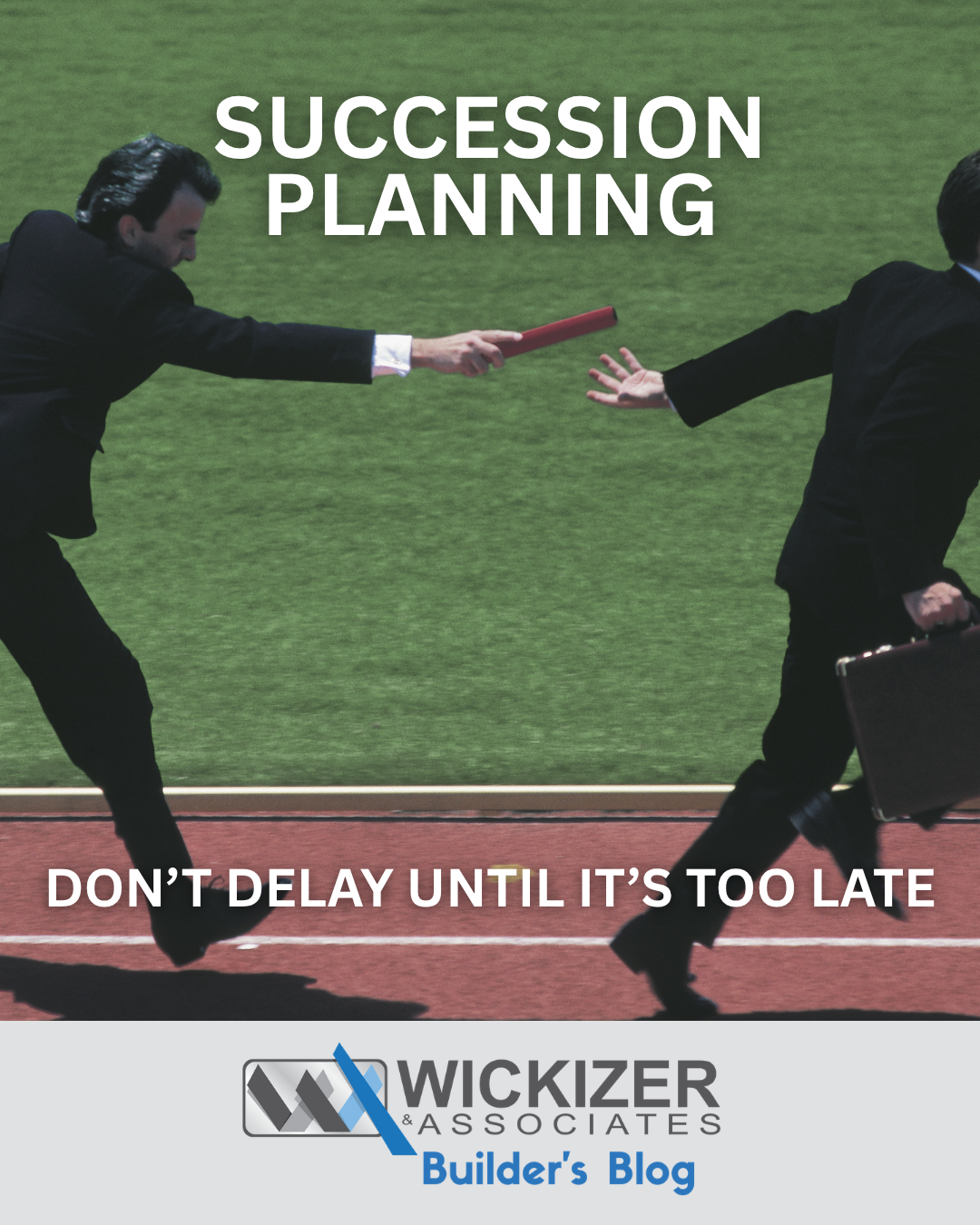
Succession Planning
Don’t delay until it’s too late
Entrepreneurs pour their heart and soul into launching and growing their business, and hardly any thought goes into what will happen after they exit. Lacking an exit strategy is risky.
A $12 million regional construction company, built by “Mike” had no succession strategy. Mike controlled all the key relationships, made all the financial decisions and did all the estimating. Mike had a sudden health issue that required him to step away from the business for several months. Within 90 days, projects stalled, clients moved to competitors, internal confusion exploded, and revenues dropped sharply. Eventually, the business was sold at a steep discount.
Succession planning is not just about retirement, it’s about ensuring continuity, value and operational efficiency in the event you leave the business (voluntarily or involuntarily). It’s about protecting what you have built.
Your business is at risk if everything runs through you. If you control the relationships, decisions, and business knowledge, you don’t own a business… you are the business. If there is no succession plan and you leave, the value of your business will be heavily discounted or may have no value at all. Yet, nearly two-thirds of family businesses don’t have a documented succession plan.. Why?
Business owners are so busy running their business, they don’t see the urgency of a succession plan or think it’s “too early” to deal with. Many think their business is too small or don’t know where to begin. Many succession plans aren’t created until the owner gets close to retirement or an unexpected event forces the conversation.
How to Build a Succession Plan That Actually Works
Step 1: Define Your Exit Strategy
Start with clarity:
- Do you want to sell to a third party?
- Transition to family?
- Promote internal leadership?
- Phase out gradually while retaining ownership?
Your destination determines your path.
Step 2: Identify the Roles That Drive the Business
Ask:
- Who drives revenue?
- Who owns key relationships?
- Who makes the critical decisions?
- Who understands the financial engine?
Then evaluate: Who can step into these roles today – or with development?
Step 3: Develop Future Leaders (Before You Need Them)
Start now:
- Delegate real responsibility (not just tasks)
- Involve leaders in strategic decisions
- Give visibility into financials and performance
- Let them make decisions—and learn from them
Leadership is built through exposure, not titles.
Step 4: Get What’s in Your Head onto Paper
Document:
- Core processes
- Key client information
- Vendor relationships
- Financial workflows
- Strategic priorities
A simple test: Could your business run for 90 days without you? If the answer is no, you have work to do.
Step 5: Create a Transition Timeline
A practical approach:
- Year 1: Delegate and train
- Year 2: Share leadership and decision-making
- Year 3: Step back from daily operations
Gradual transitions build confidence—for you, your team, and your customers.
Step 6: Align Legal and Financial Structures
Work with professionals to:
- Structure ownership transfer
- Create buy-sell agreements
- Plan for taxes and funding
- Protect business and personal assets
Strategy without structure is just wishful thinking.
Step 7: Communicate with Intention
Be clear:
- Who is stepping into leadership
- What the timeline looks like
- How the business will continue to operate
Done right, communication builds trust—not fear.
If your business cannot operate without you, you don’t own an asset – you own a responsibility. Succession planning changes this. It transforms effort into equity, a business into a legacy and uncertainty into control.
If you are a business owner, ask yourself one question: “what happens to my business if I’m not there tomorrow?”
If the answer is not clear, it’s time to start building a succession plan. Here’s the truth: the best time to create a succession plan was years ago… the second best time is now.
Rick Wickizer is a trained and ICF credentialed business coach and a successful entrepreneur. Rick has served the building industry for over 30 years and is dedicated to adding value to all he works with. For information about coaching services provided by Rick, go to: rickwickizer.com
To subscribe to this blog, go HERE